

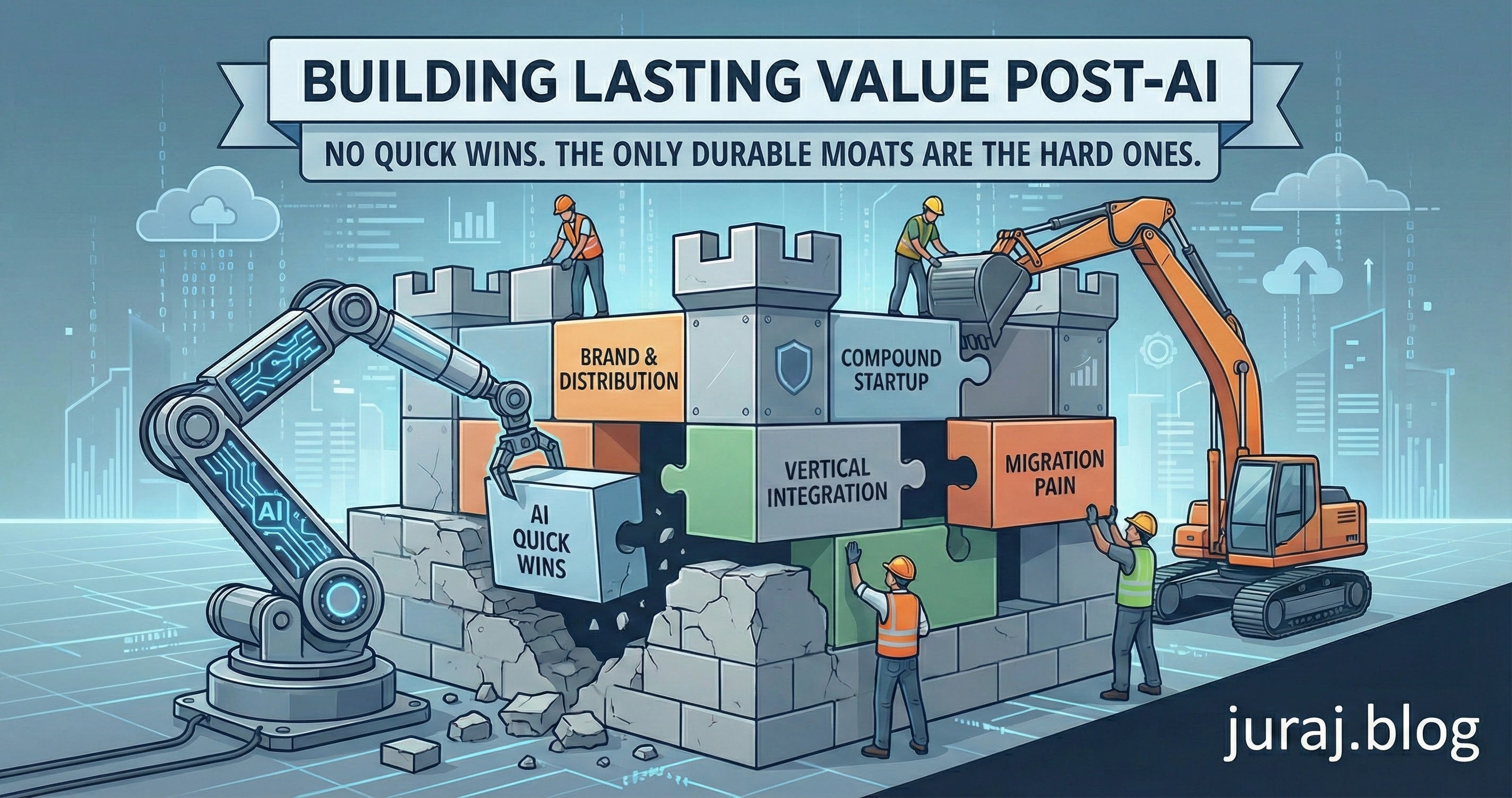
AI erased most product-level moats. So defensibility now comes from things that are intentionally hard to replicate.
brand & distribution
being a “compound startup”
vertical integration
migration pain
Brand & distribution
The obvious one. Having an existing distribution is a game changer. Think Microsoft pushing terrible MS Teams to their existing user base to beat Slack’s usage numbers.
Building a trusted brand perceived to be building quality products is priceless today. Your brand’s reputation takes years to build yet it’s trivial to lose.
Being a “compound startup”
Launching multiple tightly integrated products solving different problems for the same customer. Single product startups might be easier to build and faster to grow initially, but they’re a lot more vulnerable to competitors too.
“Compound startups” leverage that billing, reporting, authentication, onboarding, support, data models are all shared across multiple products, and you only need to build them once.
Being “a compound startup” means you can use product bundling to your advantage: you can compete on margins where it hurts your competitor but it doesn’t hurt you. Every company now pays for 30+ SaaS vendors. The bar for being the 31st is higher than ever, but selling one more product to existing customers? Easy!
But man building a compound startup is complicated! Different products mean different customers constantly pull you in different directions. If you found building a single product difficult, multi-product is a different level.
Vertical integration
How many new startups are building their own data centers today? Close to zero.
How many are hosting data in Supabase? Most.
There are things you can do with data in your own data center that you can’t do with Supabase. You can tailor your hardware to your software, not the other way around. You could optimize costs and capex/opex.
It’s an insane pain to host your own servers though. But that’s the point.
If it brings you a real benefit, it might be worth it even if super painful.
Migration pain
Can you make your product easy to onboard while being difficult to rip out?
I don’t care if a vendor sells me on a slightly better or a cheaper product if I need to change workflows of an existing team or migrate a ton of data. Switching costs are not just technical; they are social, operational, and political.
The point is there’s “no quick wins” anymore
If you launch an obvious & easy to build idea today, you’ll wake up to 17 competitors on Product Hunt tomorrow. AI removed most “easy” moats. The only durable ones left are the hard ones.
Aiming to build a lasting business? It might be easier to work on a hard problem than an easy one today.
Fantastic breakdown of how the competitive landscape has shifted. The compound startup model is particalrly intresting because it flips the traditional wisdom about focus. Most founders hear "do one thing well" but when every product can be cloned in weeks, having that shared infrastructure across multiple products becomes the actual moat. Makes me think the companies that will dominate next decade wont be the ones with the best single product but those who can manage the complexity of bundled solutions.